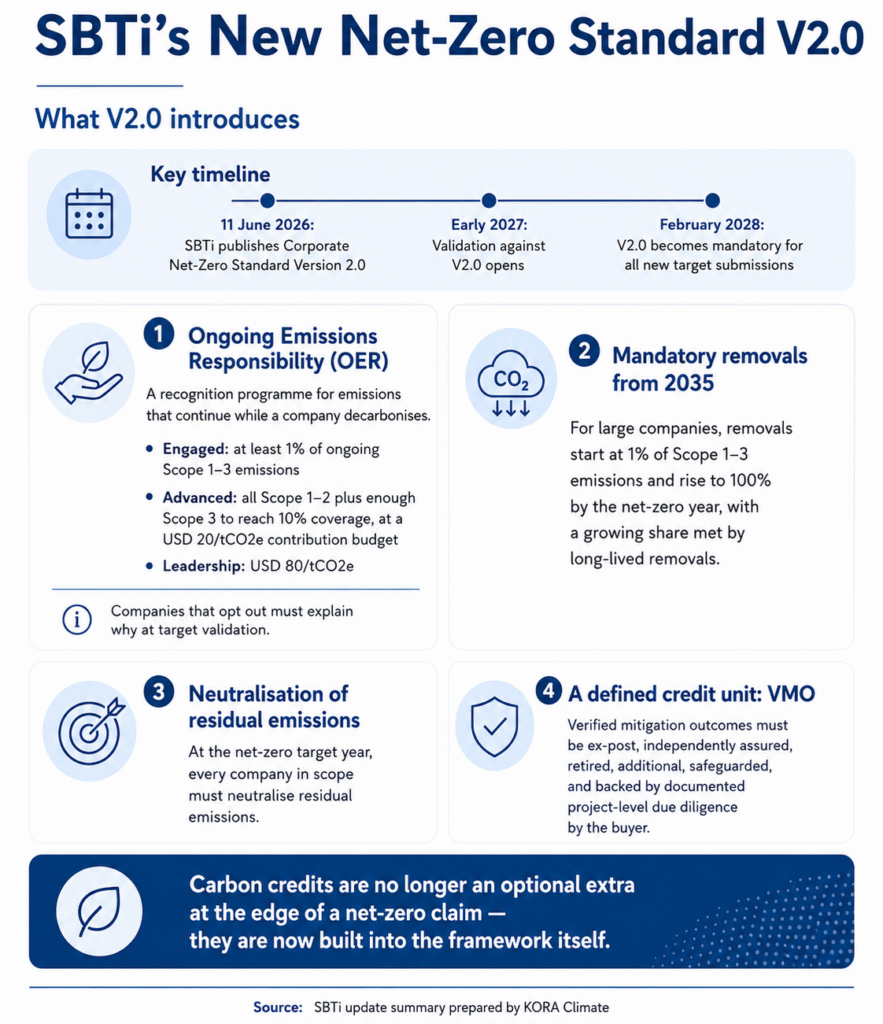
On 11 June 2026, the Science Based Targets initiative (SBTi) published Corporate Net-Zero Standard Version 2.0 Validation against V2.0 opens in early 2027 and becomes mandatory for all new target submissions from February 2028. For Southeast Asia, the most consequential change is straightforward: carbon credits are no longer something the SBTi tolerates at the edges of a net-zero claim. They are now built into the framework itself.
Key Takeaway
Carbon credits are no longer at the edge of a net-zero strategy but they are becoming part of the framework itself.
From Standards to Action: KORA Climate at TGO event
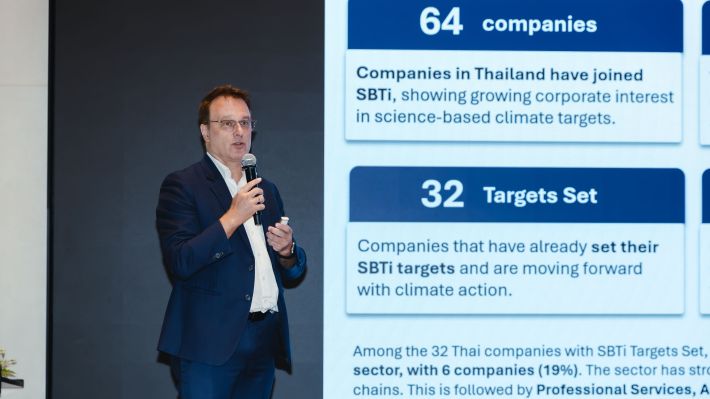
At the TGO event [17 September 2026], Jens Radschinski, Managing Director of KORA Climate, shared insights on the SBTi Net-Zero Standard V2.0, Thailand’s growing SBTi momentum and Ongoing Emissions Responsibility (OER).
Using KORA Climate’s biochar pilot as a practical example, he highlighted how companies can move from climate targets to action, prioritizing emissions reductions while using high-integrity carbon removals to address ongoing and residual emissions.
Event highlight and the event record: https://www.facebook.com/share/v/1HTm8fccAT/

What does Version 2.0 introduce ?
- Ongoing Emissions Responsibility (OER). A recognition programme for emissions that continue while a company decarbonises, with three tiers: Engaged (at least 1% of ongoing Scope 1–3 emissions), Advanced (all Scope 1–2 plus enough Scope 3 to reach 10% coverage, at a USD 20/tCO₂e contribution budget) and Leadership (USD 80/tCO₂e). Companies that opt out must explain why at target validation.
- Mandatory removals from 2035 for large companies starting at 1% of Scope 1–3 emissions and rising to 100% by the
net-zero year, with a growing share met by long-lived removals. - Neutralisation of residual emissions at the net-zero target year, for every company in scope.
- A defined credit unit: the verified mitigation outcome (VMO) ex-post, independently assured, retired, additional,
safeguarded, and backed by documented project-level due diligence carried out by the buyer.
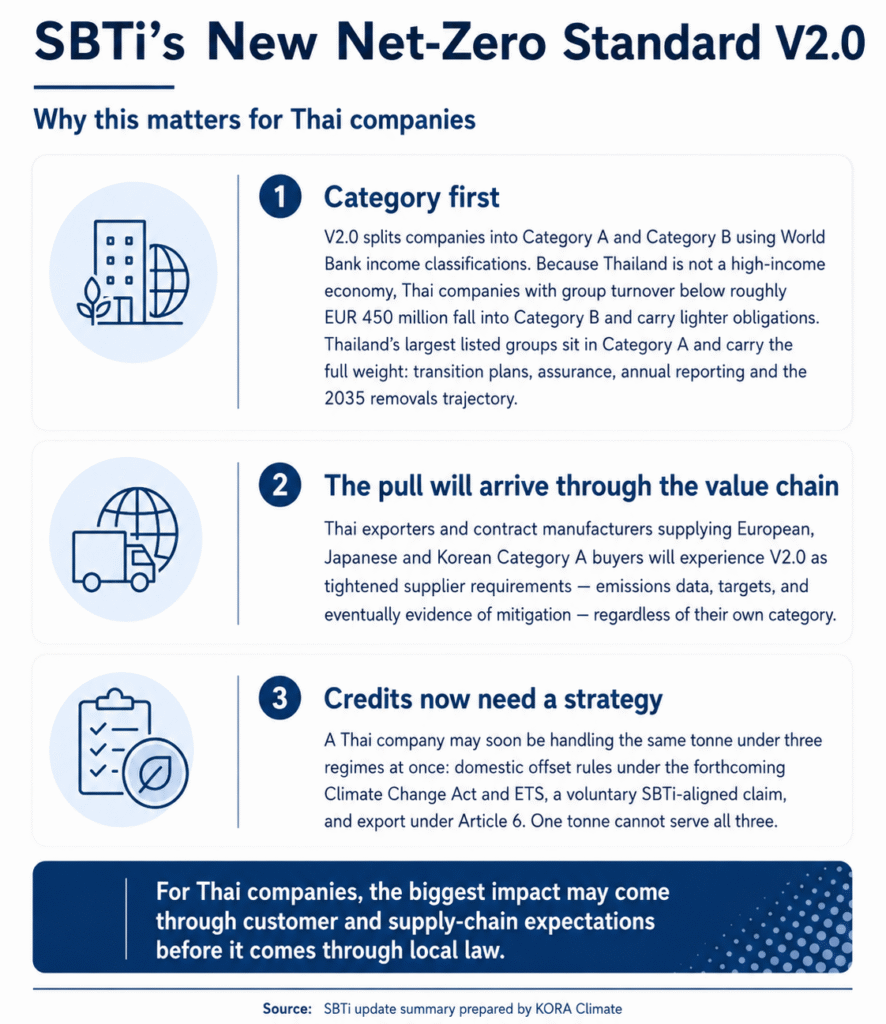
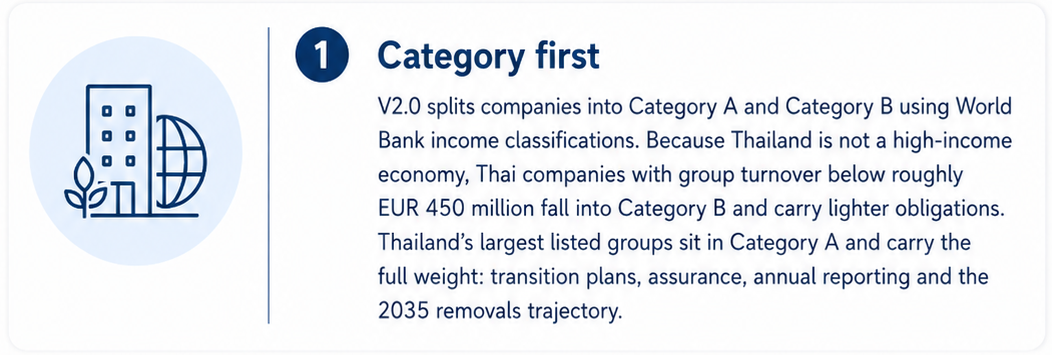
Why does this matter for Thai companies ?
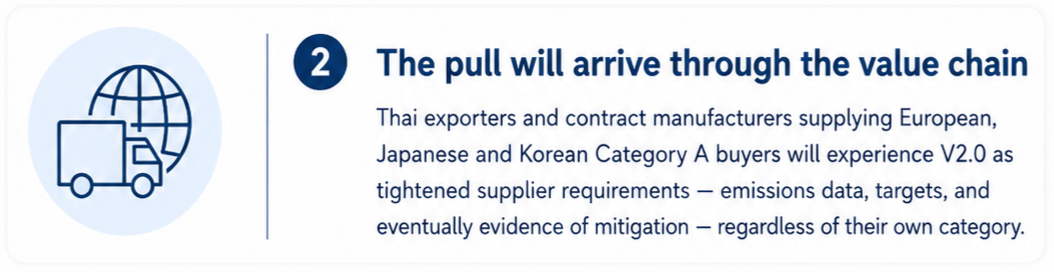
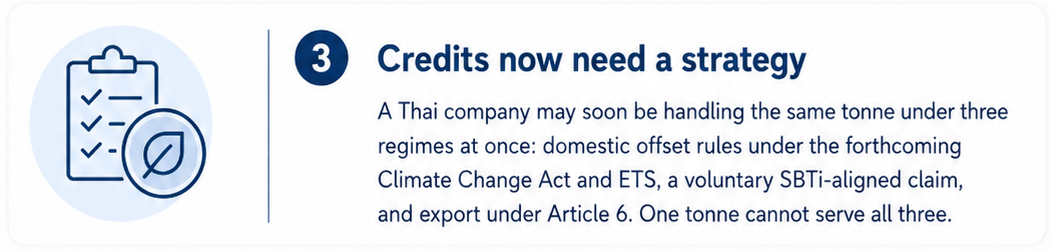
For Thai companies, the pressure may arrive through the value chain before it arrives through local regulation.
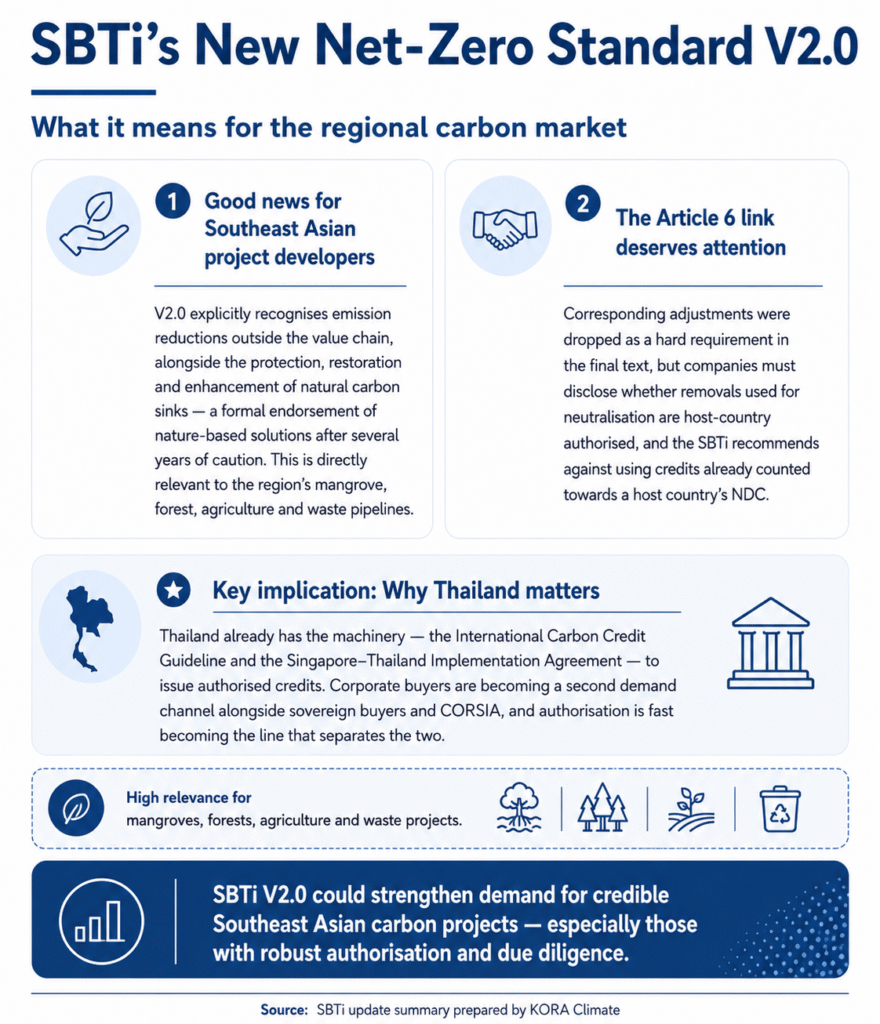
What does it mean for the regional carbon market ?
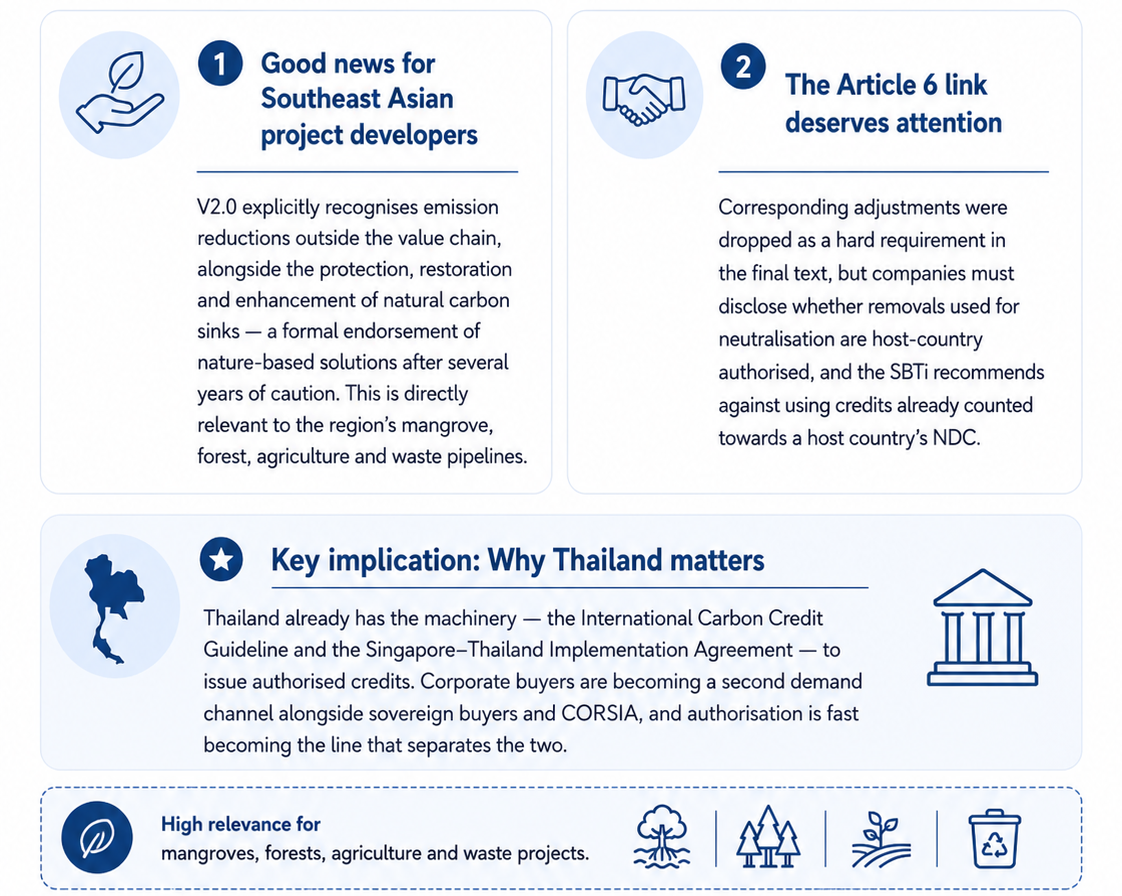
SBTi V2.0 could strengthen demand for credible Southeast Asian carbon projects, especially those with robust authorisation and due diligence.
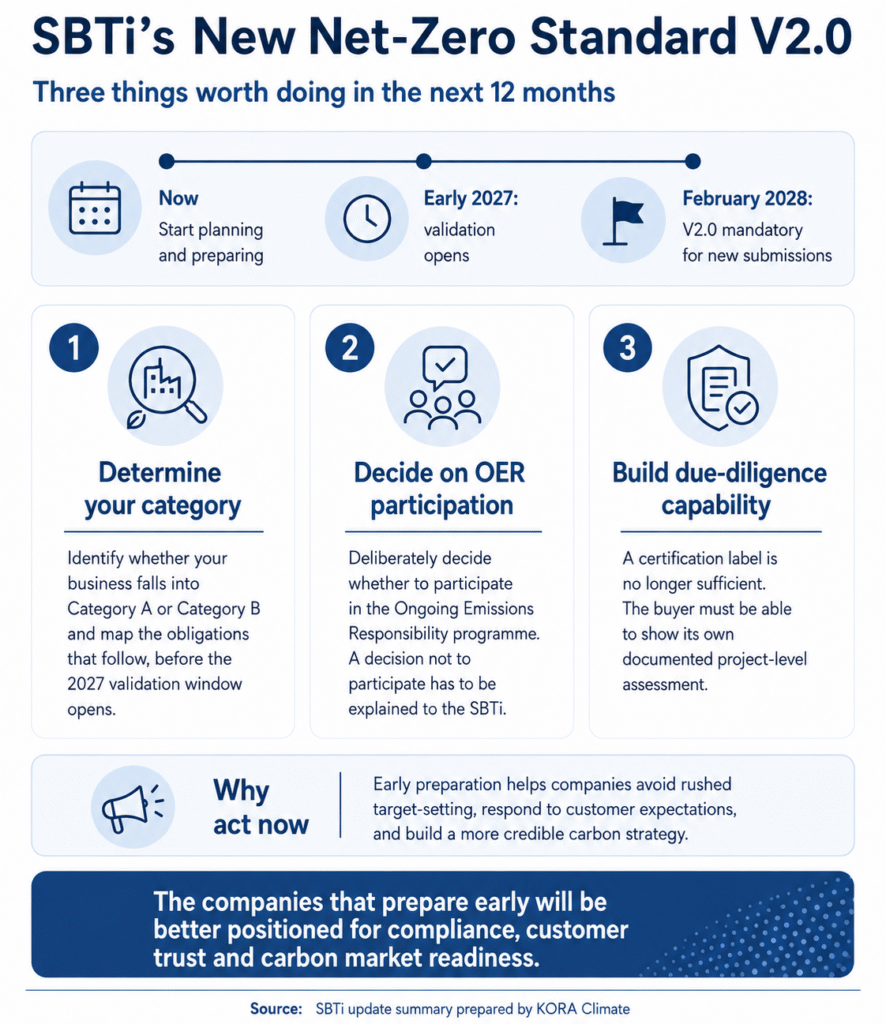
Three things worth doing in the next twelve months.
Determine your category and the obligations that follow before the 2027 validation window opens.
Decide deliberately whether to participate in the OER program; a decision not to participate has to be explained to the SBTi.
Build the due-diligence capability the standard now requires. A certification label is no longer sufficient; the buyer must be able to show its own project-level assessment.
source: https://sciencebasedtargets.org/corporate-net-zero-standard-v2
Working through what SBTi V2.0 means for your targets, carbon credit strategy or project pipeline? KORA Climate works with corporates, project developers and governments across Asia-Pacific on Article 6, MRV and carbon market strategy.
Summery infographic