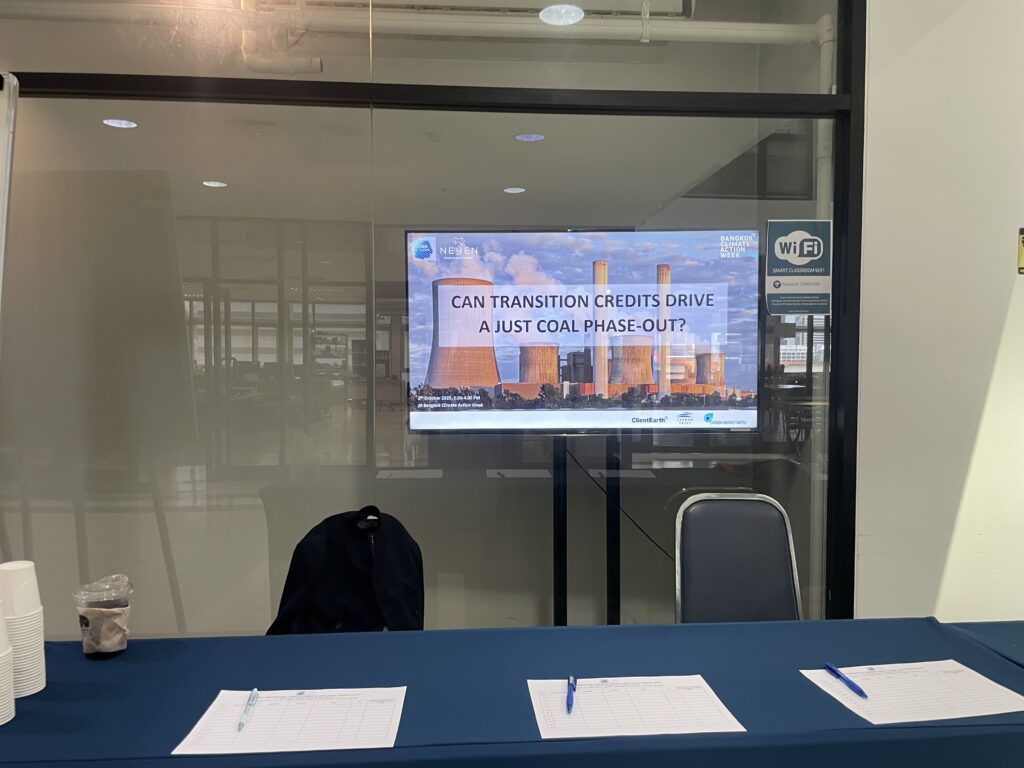
Session Summary at Bangkok Climate Action Week 2025
Background:
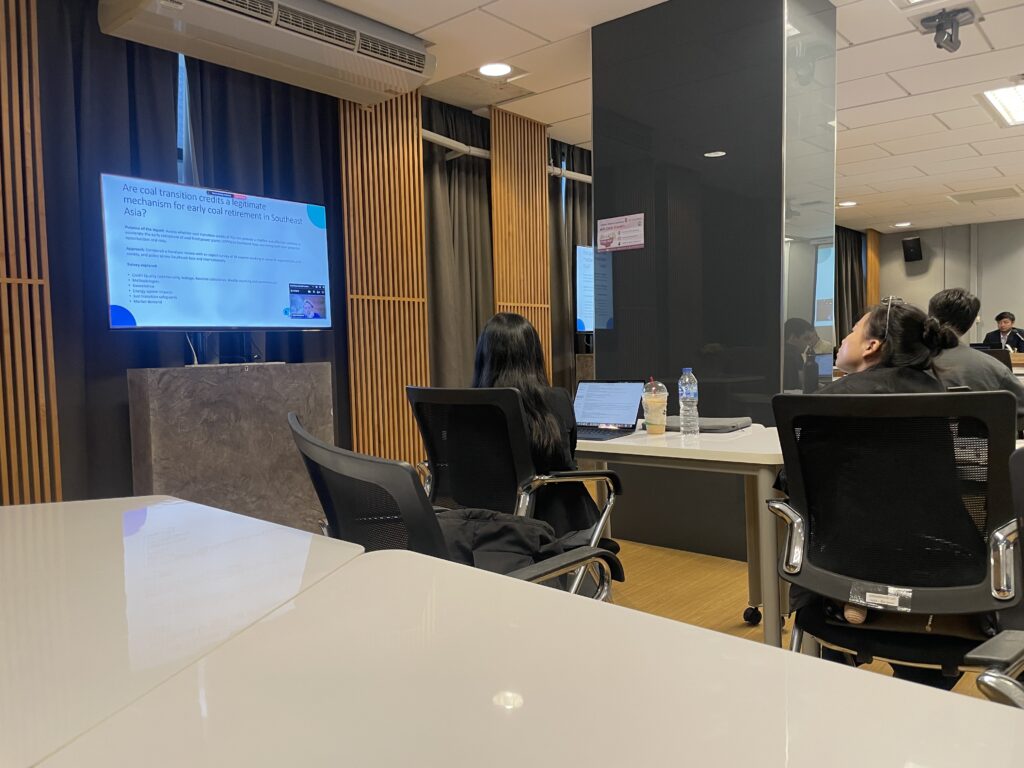
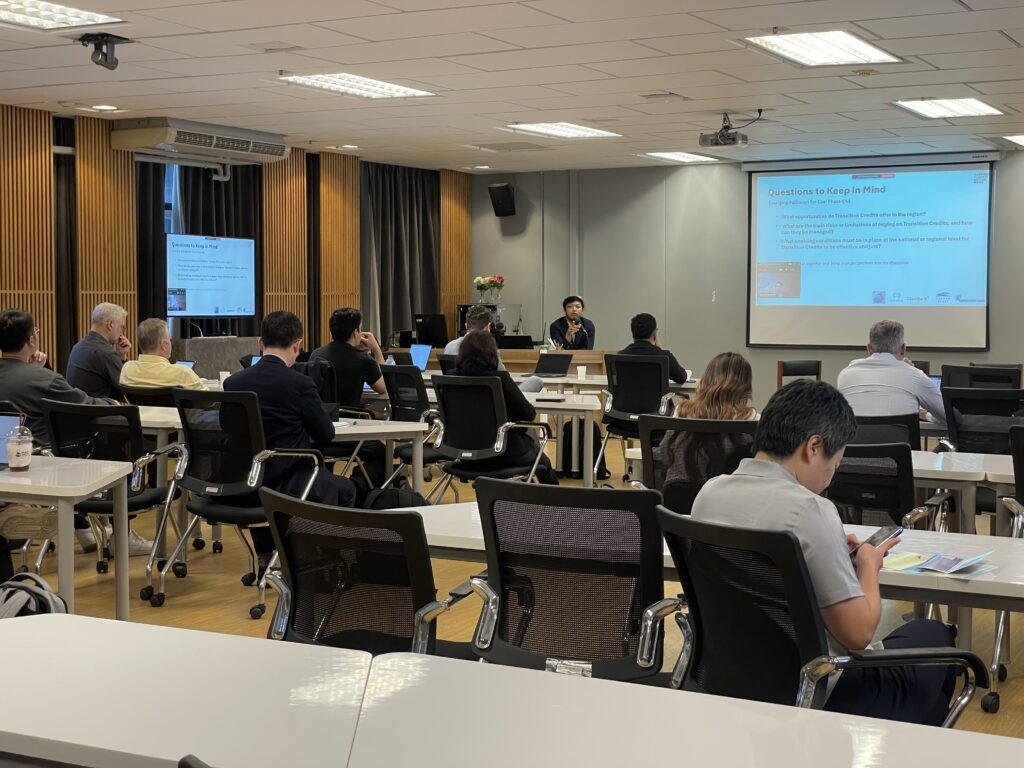
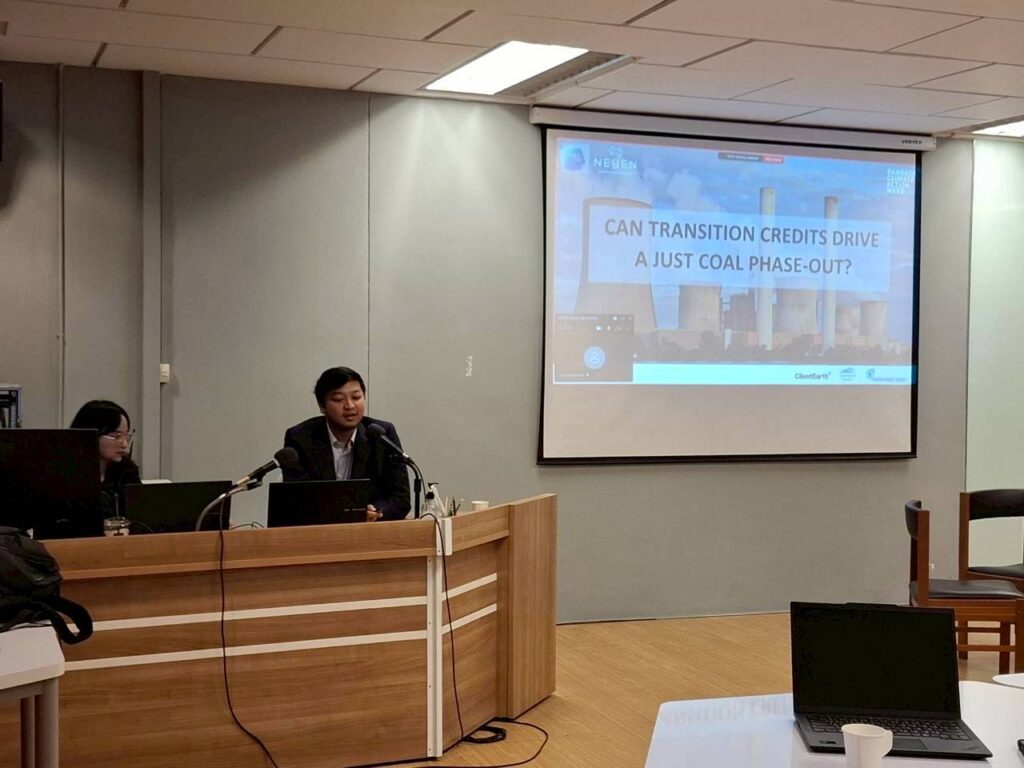
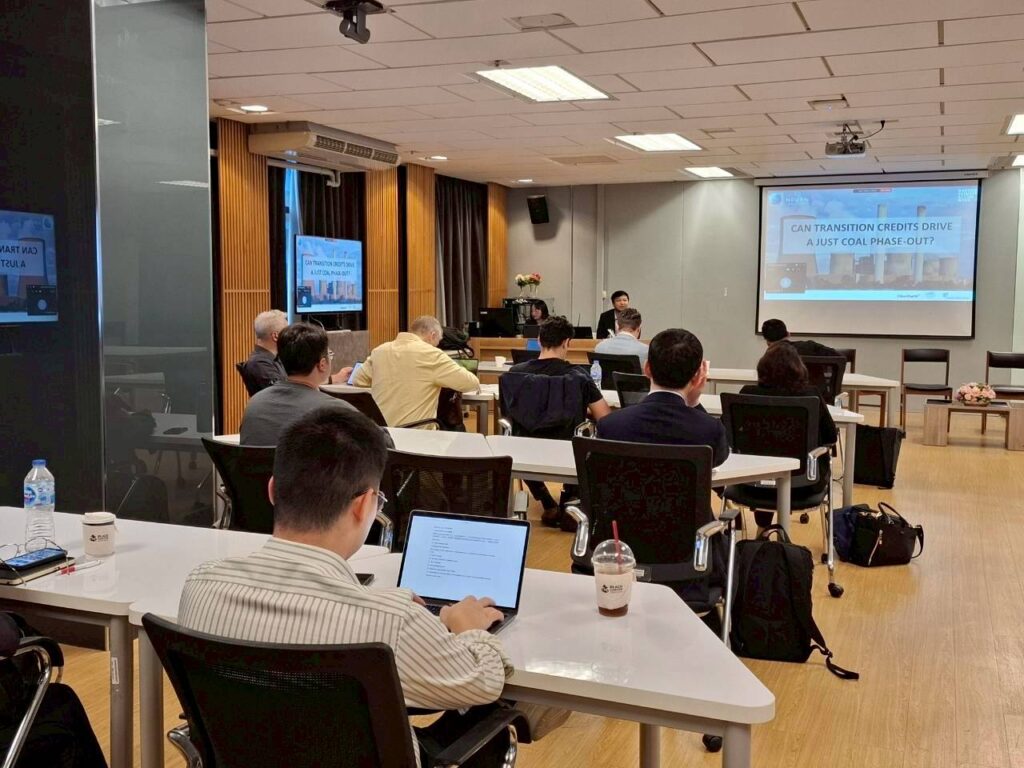
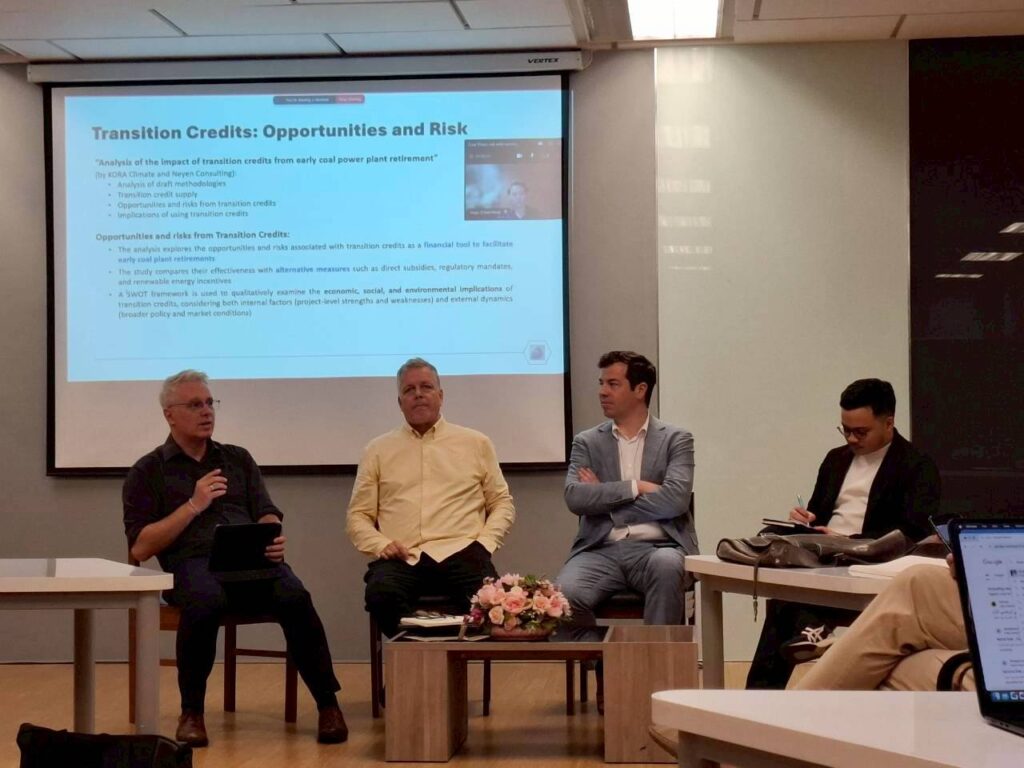
This summary highlights key points from a panel discussion session, which focused on how transition credits could accelerate the early retirement of coal-fired power plants, with a particular emphasis on Southeast Asia. Experts and participants exchanged views on the potential, challenges, and integrity of this emerging financial mechanism, contributing to a broader understanding of its role in achieving a just and sustainable energy transition.
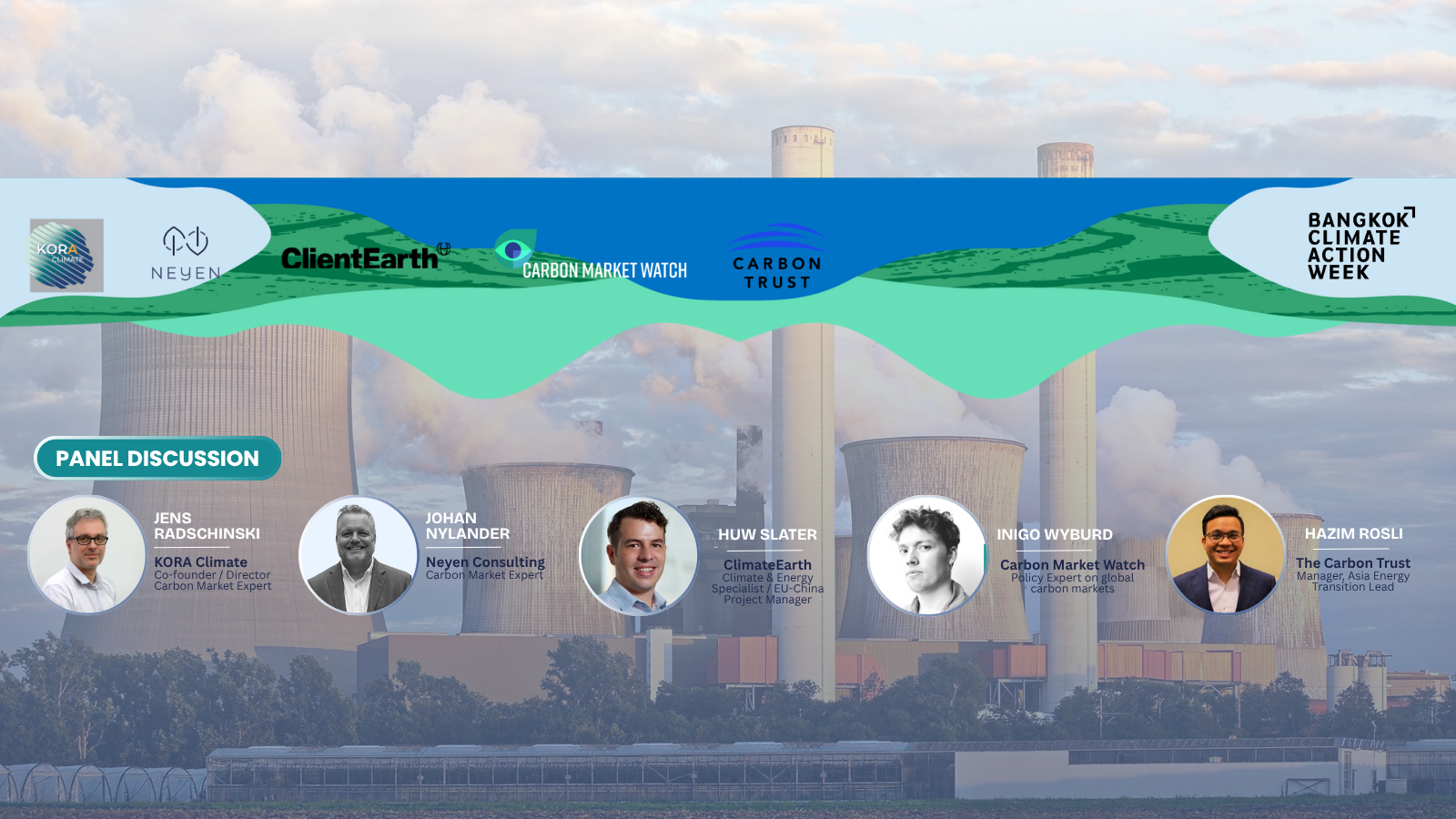
Panelists:
Representatives of the event co-hosts KORA Climate , Neyen Consulting, ClientEarth, The Carbon Trust, Carbon Market Watch.
Summary:
The discussion focused on the use of transition credits to accelerate the early retirement of coal-fired power plants, with a particular emphasis on Southeast Asia. The event brought together experts to explore the potential, challenges, and integrity of this emerging financial mechanism. The central thesis is that while transition credits present a novel, market-based opportunity to mobilize private finance for the early retirement of coal assets, they come with significant risks and complexities. Experts widely agree that credits are not a standalone “silver bullet” solution but could potentially serve as a complementary tool to fill a “viability gap” in a broader financing structure that includes public and private investment.
Key concerns revolve around the environmental integrity of the credits, including ensuring additionality (that early retirement would not have happened otherwise), preventing leakage (shifting emissions to other plants), avoiding reversal risk, and establishing credible emissions baselines. Methodologies for issuing these credits have been approved (VERRA) or are under development by various bodies, including Gold Standard, but they differ in scope and requirements. We discussed some of the differences of these methodologies, e.g. the requirement of new RE installations to replace the CFPPs.
A recurring and critical theme is the imperative of a “just transition.” Unlike in other carbon market schemes where social impacts are often ancillary safeguards, a just transition—encompassing fully funded plans for worker retraining, income replacement, and community development—is considered a core, non-negotiable component of a high-integrity transition credit project. The financial viability of the mechanism remains uncertain. The demand for such credits is not yet established, and carbon price volatility poses a major risk. The share of total retirement costs that credits can realistically cover is likely to be small, positioning them as a strategic stopgap rather than a primary driver. The success of this instrument is contingent on robust host country policies, international collaboration, and a transparent, continuous learning process as the first projects are implemented.
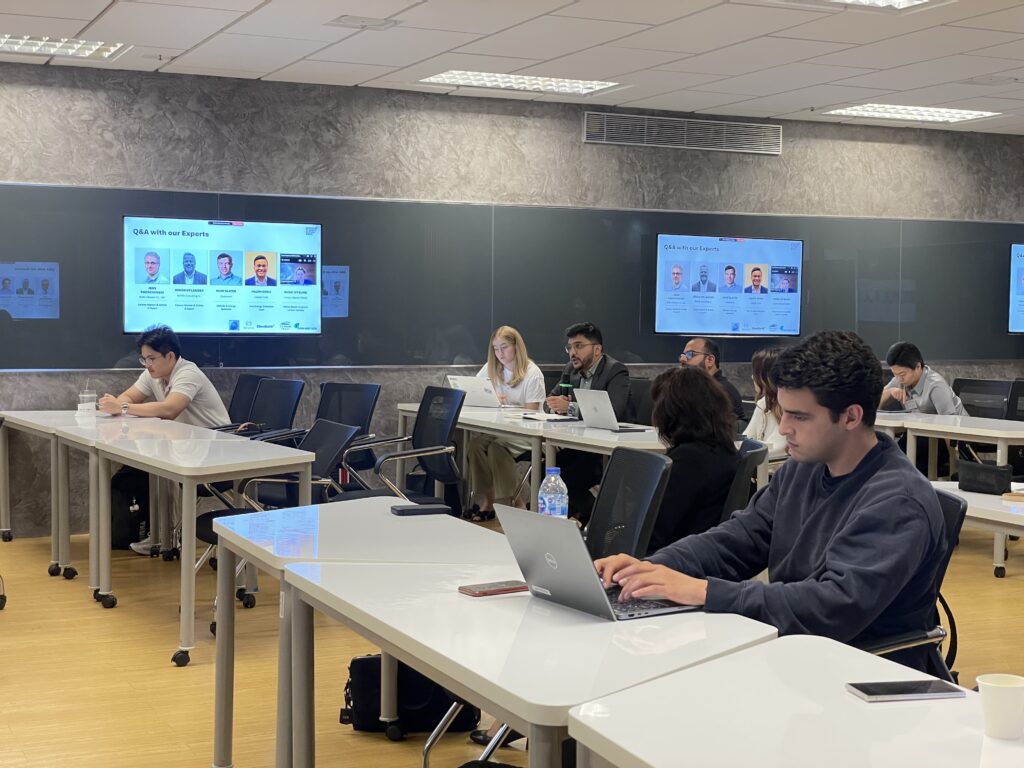
Question and Answer round
Q1: If we start paying coal power plant owners to shut down their facilities early through mechanisms like transition credits, could this set a precedent that weakens the “stranded asset” argument used to discourage investment in other carbon-intensive industries (like gas or steel)? In other words, would future investors expect to be paid to exit such industries, undermining efforts to prevent new high-emission assets from being built?
A1: Transition credits are meant to tackle the stranded asset problem by shifting financial incentives from keeping coal plants running to encouraging their early closure. While concerns remain about setting a “bailout” precedent for other sectors, current carbon credit methodologies aim to prevent such risks through strict safeguards against leakage and by considering factors like plant age to ensure genuine emission reductions.
Q2: How can transition credits be effectively used to retire coal power plants in Asia when many of these plants are still paying off their debts and have long remaining lifetimes? Would the financial gap (viability gap) make such projects too difficult or costly to succeed, especially with lending agencies involved?
A2: The example of transition credits—the ACEN project in the Philippines—it’s still unclear how much of the total investment transition credits can cover, as detailed financial information isn’t publicly available. However, they noted that the “viability gap” cannot be too large for such projects to work, since financial institutions must remain confident in lending. Typically, banks finance around 75–80% of a project’s cost, so a remaining gap of less than 20% would likely be acceptable for them to proceed comfortably.
Q3: Can transition credits be applied to coal power plants financed by Chinese state-owned institutions, especially in countries like Pakistan where investments are made through government-to-government agreements under the Belt and Road Initiative (BRI)? Or would a different mechanism be needed to address these types of projects?
A3:Most Chinese-backed coal projects, such as those in Pakistan, operate under government-to-government (BRI) agreements rather than commercial deals, making the application of transition credits more complex. However, China has recently increased efforts to “green” the Belt and Road Initiative by promoting renewable energy and exploring carbon market engagement.
China’s national emissions trading system (ETS) currently allows limited use of voluntary credits, and demand is expected to grow as more sectors, like cement and steel, join the market. While there is potential for future linkages between China’s carbon market and BRI countries, including through mechanisms like transition credits, this process is still in early stages and would likely take several years to develop.
Q4: Under Article 6, the concept of a just energy transition is not currently a formal requirement for validating transition credits. What are the chances that countries will choose to adopt methodologies that voluntarily integrate social and environmental justice principles into these credits? Additionally, is there any scope within transition credit frameworks to address local environmental impacts caused by coal power plants, such as groundwater contamination?
A4: Leading standards like Verra, along with oversight initiatives like the ICVCM, already integrate strong just transition elements, making it unlikely that future methodologies will ignore them. Under Article 6, host countries must show how projects support sustainable development, while buyers are increasingly cautious about reputational risks, driving demand for high-integrity, socially responsible projects.
Full summary document
Full event record